Thursday, February 18, 2021

The 5th Empire - Be the Change

There are two things to note about transition periods:

  1. They can go on for a very long time
  2. They are dangerous
Waiting around for things to unfold by themselves can be frustrating, while taking an overly active part in the transition may prove deadly. There's no telling how things will turn out, so it's important to play things safe. I've told my children to stay away from the armed forces, and to keep politics to themselves. In their private affairs, I've urged them to stay away from gambling. Overt risk taking in finance can get us slaughtered just as much as overly heroic action can get us killed in war.

One further thing to note about transition periods is that their outcomes are entirely a function of action. If we fail to act ourselves, somebody else will take charge and define the outcome.

Changes are made by people acting out plans and visions. Powerful people can do this from a resort club house, while ordinary people do this by being the change they want to see. To have control of our destiny we must have a plan of our own and act accordingly. Otherwise, we're likely to end up as pawns in somebody else's plan. Either willingly in their trenches, or unwillingly as collateral damage on the battle field.

Luckily for us, we don't need anyone's permission to make a plan and act it out. All it takes is a vision of a better future and the will to act it out in the present. Our personal transition into a better future can thus be done long before everybody else.

My personal vision is embodied in the myth of the 5th empire (aka God's kingdom on earth.) It's a place governed entirely by the golden rule. There is no central government. Law and order is carried out through voluntary arrangements. All of this is explained in my book on the subject.

Our first step towards a better future is therefore to declare ourselves part of that future. We must then act rationally and consistently in accordance to our vision, otherwise our declaration is meaningless.

In the case of my particular vision of the future, I make a point of being civil. I also make a point of being prudent and conservative in my lifestyle and investment strategy. The aim is to do well for myself while being of help and inspiration to others, because this sort of success is not only good for me, it inspires others to follow suite as well.

When we are successful in this way, we get followers. The network effect kicks in, and pretty soon there are others acting and living in ways similar to our own. A community emerges, all living in tune with our vision of the future. If this persists and spreads, the result will be that of a complete transition from the current era to a new one, largely or wholly in tune with our vision.

Important in this is a general avoidance of the system we want to get away from. If we fall for the temptation to try our luck in their rigged casino, we'll fail even if we manage to make a quick buck. There's no winning on the battle field of our opponents. We're either slaughtered, or we're merely an example of the old. Only by doing things according to our own vision will we inspire change around us.

My vision is that of a world based on sound money and the rule of natural law, derived directly from the golden rule. That means that I will keep away from banks and bank credit as much as possible. I'll save in gold and silver, and encourage others to do the same. To avoid premiums on gold and silver, I will encourage circulation of this within my circle of influence.

Furthermore, disputes should be settled outside of the current legal system. To avoid conflicts, deals should be settled immediately, or be backed by gold or silver as security. Heads of families or trusted friends should act as arbitrators. There should be a general return to simplicity in all our dealings.

With money matters and legal matters both under control by family and friends, secession is achieved. We become sovereign individuals with no rulers except for God (aka nature) and his golden rule.

1959 sovereign Elizabeth II obverse.jpg
Sovereign

By Heritage Auctions for image, Mary Gillick for coin - Newman Numismatic Portal, Public Domain, Link

Wednesday, February 17, 2021

Eight Reasons Why Bitcoin Isn't a Superior Form of Money

Bitcoin keeps going up in price. It may be tempting to jump on the bandwagon. But before we do that, let's consider why Bitcoin isn't a superior form of money. Why in fact, it isn't money at all:

  1. Volatility - Bitcoin is so volatile that no-one can make a budget based on it, and no contract can be written in it without huge risk.
  2. Transaction costs - Bitcoin is slow and hopelessly expensive to use for everyday transactions.
  3. Energy requirement - Bitcoin requires energy for its existence. While it's true that Bitcoin can be held without cost, Bitcoin is worthless without its associated network. That network has to be up an running at all times. This generates electricity bills that have to be paid, and those bills must necessarily be paid by the Bitcoin community.
  4. No secrecy - Bitcoin transactions are stored on a public ledger. There's no secrecy. Once the owner of a wallet is known, that person's transactions are also known. People have gone to jail based on information found on the public ledger.
  5. Not unique - Bitcoin is neither unique nor superior in its properties relative to alternative crypto-currencies.
  6. Aging technology - Bitcoin is technology and technology tends to go obsolete within a decade or two.
  7. Kill switch - Bitcoin depends on ports 8333 and 18333. If these get outlawed by internet regulators, the Bitcoin network goes down. 
  8. Not anchored in reality - Bitcoin is not a commodity good nor a productive asset. It's not used to pay taxes. Its price is based entirely on sentiment. Without an anchor in reality, its price can be anything. Hence its volatility.
Given the above list, it's clear that Bitcoin isn't money. Nor is it a commodity or an income generating asset. It's a lottery ticket. There's no telling how high or low it will go, so it's perfect for gambling.

Trade accordingly.

Casascius coin.jpg
Brass token currently priced at about $50,000

The 5th Empire - Transition Periods

Transition periodsare by definition periods in which one system of thinking is replaced by another system. That's why everything from fashion and architecture to science and commerce looks so different from one era to another.

This means that if we're currently in a transition period, we should see evidence of the old system falling apart and the new system emerging. The old will be easily recognisable due to the fact that it's a continuation of something that's been around for decades. However, the new may not be all that easy to see, at least not to start with, because it has no past. It's not clearly defined. It's an emerging thing, and it can be changed while it develops. It may even be controlled. There's certainly a lot of effort being currently spent on a controlled transition from the 20th to the 21st century.

The Great Reset is frequently being mentioned as the inevitable transition. Seen from the perspective of those currently in power, this is the desired outcome, and hence it's presented as both inevitable and desirable to the masses. However, it looks and feels like more of the same. It's a progressive idea, where the elite manages everything, precisely the way things have been throughout the 20th century. The Great Reset is not a change from the old, but a continuation of it, and this can be clearly seen by the way it's already failing on its promise of sustainable growth.

The new cannot be a mere continuation. It must either be a return to something that existed in a previous era, or something completely untried and untested. As such, radical liberty may be the way of the future. A system of little to no state authority would certainly be a change from the current authoritarian progressivism. But there is very little evidence for this at the moment. The overwhelming majority of people are still very much in favour of expert advice as public policy. If radical liberty is in our future, it's still a long way off.

Looking around, we see evidence of systemic decay. There's a restlessness and sense of futility. Nothing is real. Everything is just a game, and there's no consequences for bad behaviour. But reality is about to poke a finger in our eyes. People in Texas and Germany have had some cold days. There's all sorts of nasty things on the horizon. The current era has run its course. Collapse seems inevitable, and something new must therefore take its place, even if deeply unpopular with a large portion of the population.

Change rarely comes about by popular demand. Radical changes force themselves onto people. The people behind these changes are always a minority, and their popularity is not an issue. The 20th century was engineered in large part by a handful of men on Jekyll Island back in 1913. That's clear evidence that great changes don't require popular backing.

The transition from 19th century liberty to 20th century progressivism was swift and visionary. The engineers knew exactly what they wanted and how to get it. Once the transition was in place, they let their plan grow organically into what we have today.

One year after their meeting at Jekyll Island, there was a great war financed through central banking. After this exhausting experience, people were ready for the state to take on more control. The welfare state was born together with the new financially leveraged warfare state. The transition took no more than five years, and its continuation has lasted until now. However, the system is very much in decay. The fourth horseman of central banking is knocking on our door.

The transition from 18th century monarchy to 19th century liberty was much less coordinated. In some places like England, the transition was largely one of inconvenience due to the Napoleonic wars. The English didn't depose their king. They kept all the old institutions. The changes were subtle. But the effect of these changes were far reaching. In the US, there was a swift revolution with similar far reaching consequences. But in France, the financial and cultural hub of the world at the time, things got positively wild. The transition period as a global phenomenon lasted from 1776 in the US until 1820s in places like Portugal and Spain. A whopping 44 years.

The engineered transition into progressivism lasted five years while the more uncontrolled transition to liberty lasted 44 years before coming into full global effect. Assuming that we're headed towards liberty once again, we're more likely to see the sort of length transition, much resisted by the elite, that happened in France at the end of the 18th century than the quick transition that happened in the US at the beginning of the 20th century. We're not going to get the swift reset that the elite is hoping for. We're going to get a messy revolution, and it will be particularly messy at the financial and cultural centres of the world. Washington DC, New York, London and Paris will be hotbeds of unrest going forward.

As a reminder, the French Revolution ushered in seven years of political and economic chaos under the first republic, followed by fifteen years of war and turbulence under Napoleon. Something similar may well happen this time around with progressivism first going into hyper-drive, followed by years of military overreach. Only when all this turmoil comes to an end will we be firmly into the next era. Hopefully, it will be one in which civility and common sense is once again the order of the day.

Execution robespierre, saint just....jpg
Execution of Robespierre

By Unknown author - This image comes from Gallica Digital Library and is available under the digital ID btv1b6950750j, Public Domain, Link

Tuesday, February 16, 2021

The 5th Empire - Civil Revolution

I've long had the sense that we're living through the end of an era, and one thing that distinguishes one era from another is a difference in style, both in fashion and architecture. Style reflects in turn the general order of things. Open any history book, and we see pictures of people wearing clothing that pin point the era in which they lived. The same with architecture. Buildings look different.

I mentioned this to my brothers while on a family outing in Prague back in 2014. While they didn't share my sense of an oncoming storm, they agreed that fashion and architecture has remained fairly steady ever since the first world war. My architect brother pointed out some changes that have been enabled through computer modelling and new materials, but he agreed that the overall style of simplicity, void of ornamentation, has been a constant theme throughout this time period.

The same can be said about science, which is still dominated by ideas dating back to the early nineteen hundreds. Political economy is likewise dominated by ideas dating back to this time. Styles in art, music and culture can also be traced back to those years, so we're most definitely still in this era. But things are starting to fall apart. There are changes afoot, and we should prepare ourselves for a bumpy ride because the transition from one era to another has had a tendency to be dramatic.

The 18th century ended with revolution. Power passed from royalty to gentry. The 19th century ended in a world war, after which everyone got to vote regardless of gender or social standing. A similar change is likely to happen as we transition from the 20th to the 21st century, and it appears that the battle for control has already begun.

The virus scare we're currently living through has the general feel of a psyop. There's a constant repetition of a narrative meant to scare us into submission so that those in control will remain in control as we transition into the new era. There's also ample evidence that news is no longer news but scripted narrative. Only that which fits the narrative is allowed out of the local news context, and into global news. Furthermore, local news that doesn't fit the narrative is always presented as odd and unusual, and in no way representative for a general trend.

This has been fully illustrated by the way the latest cold spell in the Mid-West has been completely ignored outside the US, and simultaneously presented as if nothing like this is happening in other places. TV news in Portugal has not given the cold spell in Germany or the Mid-West any attention. Yesterday's headlines were limited to the announcement of a new royal baby in England, a locust plague in Kenya, snow in Moscow, and the latest numbers of Covid deaths and vaccines.

Immediately after the news, Bill Gates was given an hour to explain the need for a complete transform of society in response to Covid and climate change. Not only is this man eager to give everyone a shot and a Covid passport, he has plans to cool the planet, and he looks forward to having us all eat bugs instead of proper foods. Record breaking cold in Germany and the Mid-West wouldn't fit into this narrative, so it was no wonder that three million people freezing their socks off due to a lack of electricity and natural gas had to be tossed into the editorial waste bin.

Rolling black out and nobody caring if millions freeze or starve used to be the very definition of a third world country. Seen in that perspective, the Mid-West just made it into this category, but this is not going entirely unnoticed. The likes of Bill Gates and Joe Biden who stubbornly stick to the scripted narrative in face of overwhelming evidence that it's all a big lie, should be careful. There's definitely some resentment building against them and their arrogant dismissal of the plight of ordinary people.

The problem with scripted narratives is that God (aka nature) has a tendency to do things his own way. It's almost as if he has a will of his own. He comes up with all sorts of inconvenient truths just to poke fun of the script writers. How the climate refuses to play along with the script is evidence of this. There's also a lack of dead bodies related to the Covid virus, which is nothing like the plague that God sometimes tosses upon us, especially when we think ourselves better than him. It would not surprise me if God gave us a round of a truly horrific disease just to put the virus scare into perspective.

Pretending to be God has never worked out well in the past, and I'll be surprised if this latest attempt at controlling the narrative is going to work much better. I can already see the outline of some unintended idiocy coming our way. There's a hearing planned in Washington DC related to the Game Stop debacle that happened a few weeks back, and it would be particularly humorous if this were to coincide with an epic crash of the stock market due to the cold spell in the Mid-West.

There's a disaster waiting to happen due to bills that will have to be paid. A lot of people will be hard pressed to pay these bills, and will therefore have to sell something. While it's possible that this can be done without affecting the current speculative mania, it's more likely to be a wake up call. People will learn the hard way that speculative assets don't necessarily command a bid. Only that which is required as a commodity to produce real things, or generate an income through the production of such things, are assured a bid. Everything else can have bid disappear in an instance.

If enough speculators suddenly have to sell something that isn't required in real life, others can simply refuse to bid, and the price will collapse. Bitcoin can drop 90%. Tesla, which is now tied up to Bitcoin through Elon Musk's latest bit of financial trickery, can drop 70%, and the S&P 500 which is tied up to Tesla can drop 50%, all in the space of a few days.

A further effect of high energy bills will be a general increase in the price of all things necessary in life. Speculative assets will drop at the same time that life necessities go up. If this happens while people in Washington DC are discussing Game Stop, people will get more than a little frustrated. They will see these people as the clowns that they are. There will be more than just talk of secession. Communities will stop paying tribute up the ladder and start doing things their own way.

Some people think that such a series of events must necessarily lead to civil war, but history tells us otherwise. Rome had its civil war. But that was not how it ended. When Rome finally fell to the Goths, nothing much happened. Rome simply transformed itself over the following centuries into what was first referred to as Christendom, and is now known as the West.

This is the more likely path forward for the US, especially if we avoid a civil war. If everyone with influence to change things for the better in their community refrain from gloating over the misery of adversaries, there's a good chance that Washington DC ends up irrelevant in the same way that the city of Rome ended up irrelevant. What remains would be the idea that the US represents, namely the spirit of Liberty.

The US can in this way transform itself into a spiritual empire. The collapse of Washington DC will herald in an era similar to that outlined in the myth of the 5th Empire. There will be focus on community and liberty, and law will be derived from the golden rule. This would be a fantastic transformation, and it's within reach, provided we remain civil and level headed through the transition.
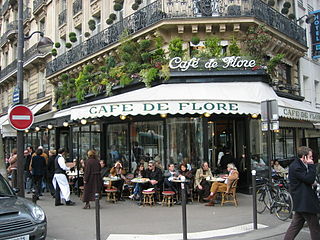
Café de Flore.jpg
Café de Flore

By Arnaud 25 - Own work, Public Domain, Link

Monday, February 15, 2021

My Parasol

We're having a fine spring day in Portugal, with a strong sun and temperatures pushing 20C. It's the perfect day for a walk, so I went out in my eccentric outfit, with my umbrella open to protect my head against the sun.

Again, I was proven right in my thesis. The outfit deflected attention away from the fact that I'm wearing my mask under my chin. No-one commented on me wearing my mask wrong. But three random strangers asked about my umbrella, to which I replied that it isn't an umbrella but a parasol. My response was both unexpected and logical, so they started laughing. What else could they do? This kind of unexpected logic is after all the nuts and bolts of all jokes.

One guy who wasn't wearing a mask himself called out a friendly good day as he passed me by. This was particularly pleasing because one of the great strengths of Portuguese culture is the friendly manner in which complete strangers interact with each other, and I've noticed that this has been greatly reduced after mask wearing rules came into effect.

I suspect that one of the more sinister motives behind the mask wearing rules is the desire to stop people from interacting in this friendly manner. There is a desire to divide and conquer. They want us confused and angry rather than happy and polite. Seen in this light, the random interactions I encountered were all little victories. There was no antagonism, only light hearted chatter and curiosity.

Sun (Earth POV).jpg
Sun

Sunday, February 14, 2021

Paying the Bills

There's something odd going on in the US energy market. The distribution of gas and electricity seems to have clogged up. The cold weather is too much for the infrastructure to handle. Taking the blame for this is the unusual severity of the current chill. However, there's nothing new about cold weather in the US during winter. The fact that the infrastructure is struggling to keep up with demand indicates that something is amiss.

The headlines remind me of conditions in the Soviet union before and during its collapse. There was no lack of energy. Their problem was distribution. Their infrastructure had been underfunded and neglected for decades to the point that it finally collapsed. Similarly in the US today, infrastructure is being neglected.

The result of this is that gas and electricity prices are off the charts. The energy bills distributed to consumers over the next months will be unusually big. A lot of money will be required, and the question is where all this money will come from. Those entitled to a stimulus check may see it all used on energy. Others might have to sell something. In all cases, there will be a need to cut down on discretionary spending. The iPhone will have to wait.

The impact of the cold weather, combined with failing infrastructure, is likely to cause harm to the US economy. Especially hard hit, will be industries that consume a lot of energy. Mining Bitcoin in the US is probably not a great business at the moment. Miners will either have to shut down their machines or sell more Bitcoin than usual.

Depending on how bad this gets, the impact may be widespread. Everyone needs to stay warm. There are bills to be paid. If the bills go up a lot, other expenses will have to wait. Small time speculators will have to delay their next bet. They may even sell a few shares just to stay warm. People will all of a sudden become more cost conscious, and they may start to view their possessions in a different light.

This happened to me back in the summer of 2016. Faced with increasingly expensive bills on my house in Norway, I was forced to reconsider the true value of ownership. The fact that house prices had been going up had blinded me to the fact that the house was actually a drain on my personal finances. It was only a question of time before I would be out of cash. Unless I realized my paper gains there and then, I would be forced to do so at some later point.

That's when I realized the true beauty of owning gold rather than real-estate. While real-estate and gold were both going up in nominal terms relative to the Norwegian Krone, only gold did so without any expenses attached. My house had all sorts of fixed costs associated with it. The fact that it had outperformed gold was masking the expenses. When subtracting the expenses of owning the house from its nominal price increase, it was underperforming gold.

Simply sitting on real-estate is a terrible alternative to owning gold. If not rented out, real-estate should be sold. But owning gold is greatly discouraged in Norway. Most people choose to buy summer houses and cabins with surplus money. My brother owns two summer houses, one next to the other. The only logic in this is that it's better than owning cash in Krone.

Central banks are leading people into this kind of investments, with bills having to be paid every month, through monetary debasement. It's a trap that drains the financial resources of the saver. Instead of a nice little stash of sound money, people sit on assets that drain their purchasing power. Real-estate does this. So does Bitcoin, which requires someone to cough up money every month for the electricity bills. Its a hidden cost to most Bitcoin owners who simply sit on their tokens with no cost. But this is deceptive. Bitcoin is nothing without its associated network. The maintenance of this network requires someone to sell Bitcoin just to cover the electricity bills. The network as a whole is a liability to the Bitcoin community. Seen in this light, Bitcoin is a Ponzi scheme. It requires a constant flow of money into the community in order to pay for the cost of maintaining it. Without this constant flow of money from investors to energy suppliers, Bitcoin will collapse into nothing.

Neither real-estate nor Bitcoin are sound money alternatives, because sound money don't have fixed bills associated with them.

Mummonmökki.jpg
A cottage for the husmann

By Valtov at fi:wikipedia - Originally from fi:wikipedia, Public Domain, Link

Saturday, February 13, 2021

The Mask of the Beast - An Eccentric Story

My wife wondered out loud this morning: Why do they promote the wearing of two masks? To which I replied: Because it's funny. Then I expanded my answer with a reference to Portugal's feudal past.

Imagine the rulers in their castle high above the village. They look down on the people there, and they decide to play a prank on them. They tell them that a terrible plague is on its way, but wearing a sock across our nose and mouth will keep the plague at bay.

The villagers are scared by what they hear, and do as they are told. Pretty soon everybody but the village bum is wearing a sock across their faces. This is such a funny spectacle that the elite decide to up their game by telling the villagers that one sock is not enough. Only two socks worn across our faces will save us from the plague. As the villagers don their second sock, the elite rolls around in laughter.

The power play and psychology in all of this is fascinating. There's all sorts of things going on. One of them being the urge for conformity among people. There's a desire for rules, because rules make things predictable and controllable. The insecure take comfort in this. No longer do they have to think. They can simply follow the rules. They can even grow powerful by telling everyone else to following the rules as well.

My success in confronting hobby fascists who hang out of their car windows, yelling at people for not wearing their masks correctly, derives at least in part from this desire for conformity. There's a script that everyone tacitly accept. There's the heroic hobby fascists, and the freedom loving non-conformists. These people yell at each other at a comfortable distance. Everyone feels the rush of adrenaline. There's tension. There's strife, but no victors. However, this all changes if we deviate from the script. Not only did I comply to the latest request, I drew closer to the fascist. He got to have a good look at his creation, and it was evidently not to his liking. Hopefully, he's still having second thoughts about continuing his heroic effort to enforce the sock rule.

Illustrated in all of this is the power of eccentric behaviour. I'm eccentric by nature, so it comes naturally to me to break the rules of convention. Inherent in this is my deep seated curiosity about all things. I like to see things from multiple angles. I like to know what most people believe, and I like to know the alternatives that fit just as well, or possibly even better. Surprisingly often, I find things to be quite different from what is generally believed, and the fact that I've been able to save myself a small fortune based on this type of insight tells me that I'm onto something.

This means that I'm quite aware of what's considered normal. I'm not eccentric out of ignorance. I'm eccentric due to my insights. My eccentricity is my superpower. I can fold into society, or I can stand out as the odd one. It all depends on what I feel like doing.

Going out for a walk today, I wanted to try out a method for keeping the hobby fascists away. Rather than surprising them with my eccentricity after they stop and shout at me, I wanted to keep them away so that they don't even try. The strategy I was looking for is one often used in nature. Many animals come across as more dangerous than they really are, thereby keeping predators at bay. But I didn't want anything too outlandish. It shouldn't look scary, just odd and unpredictable. The fascists should be forewarned that I'm not following the generally accepted script, and that something out of the ordinary might happen.

That's when I got the idea to keep an umbrella above my head despite the sunny weather. An umbrella can be used as a hat. It has a function, even when it's sunny. It's just not done anymore. No-one walks around with a parasol. To do so would be eccentric.

A further advantage of the umbrella is that it gives a pretty clear message about the general insanity of our current situation. People are wearing masks for no good reason, so why shouldn't I use an umbrella against the sun? Me using an umbrella against the sun is less idiotic than them wearing a mask. The only reason I'm eccentric and they're not is convention.

This is what distinguishes eccentricity from madness. The mad person does weird things for no good reason at all. The eccentric does weird things due to a disregard for convention. The mad man is scary. The eccentric is merely odd. But the fascist would rather stay away from both, because neither the mad nor the eccentric follow the tacitly accepted script.

To underscore my eccentricity, I brought out a coat that I've rarely worn due to it's anachronistic look. It has a steam punk feel to it that has rendered it somewhat useless until now. But it's perfect for this latest stunt, so I went out wearing my mask under my chin, pilot sun glasses to protect my eyes, a 19th century coat and an umbrella.

The effect was twofold. A lot of people seemed to get the joke. It's clear that quite a few resent the idiotic mask wearing rules. I came across one of my down and out "bum" friends down the road, and he most definitely got the joke. Secondly, it worked as intended against hobby fascists. One guy was about to open his window to give me a verbal scolding, but thought better of it even though I very much encouraged him to do something by smiling cheekily in his direction. One lady yelled at me, but not about my masks. She told me to drop the umbrella. This woman had no doubt told me to wear my mask properly, but my umbrella protected me against this.

The umbrella highlighted the insanity of our times while at the same time deflecting people's attention away from my non-compliance. It worked so well that I'm definitely going to continue this for a while longer.

M0354 000727-005 1.jpg
Umbrella

By MONNIN Jacques - This file is from the collection of the Musées de la Haute-Saône and has been published on Wikimedia Commons as part of a cooperation project with Wikimédia France., CC BY-SA 3.0, Link