Wednesday, June 17, 2026

The Hidden Psychological Cost of Debt

Most financial advisers will tell us that debt is a good thing when it's used to buy a house or financial instrument. They will point to tax benefits and inflation as good reasons to go into debt, rather than to first save and then buy.

Valid arguments, but not sound advice

Their arguments are valid. Tax benefits related to debt are often generous, and inflation will eat into our debt over time.

But this doesn't mean that debt is a good idea. Because the moment we go into debt we bind ourselves to a cash flow that has to be generated.

We become less free when it comes to how we spend our time, and how we allocate our money. We're no longer free to do as we please. Rather, we're tied to a contract where we have to provide money for others in order to keep what we have bought.

Dept and wealth are polar oposites

Debt locks us into a mindset defined by our need to generate cash flow, and the stress associated with this is a cost we must take seriously. Because the constant need for cash locks us into jobs that we may not like, and we start making investments based solely on our need to cover debt.

Furthermore, there's the constant threat of higher interest rates, driving up costs, and further tying us down.

This is the opposite of wealth. Because true wealth sets us free, and enables us to make decisions based on other factors than cash flow.

True wealth makes us relaxed and confident. It makes us independent of others, including banks and their interest rates.

This in turn, put us in a position to make financial decisions that further reduce our dependence on others. We enter a virtous cycle, where wealth accumulates over time.

Debt urges us to do "clever" things

When in debt, there's a constant urge to do "clever" things. Things have to happen sooner rather than later, and get rich quick schemes attract our attention.

This is rarely a good thing. Because good decision making requires time. If things have to happen quickly, we tend to go with the first ideas that come to mind, and better ones pass us by. We jump onto fads, rather than long term trends.

The cost of this is not only emotional. It can be devastating financially as well.

What to do instead

So, instead of going into debt, make a habit of saving. First in a savings account to build up a cash reserve, and then in stocks and/or precious metals.

The cash reserve should never exceed what is required for peace of mind. Because inflation will eat into it over time. However, stocks and precious metals tend to grow at rates above the inflation rate, and are therefore where the majority of our savings should go.

Then, as we reach a point where we have enough money to buy a house, either completely debt free, or with a minimum of debt, we can sell some of our savings.

This may mean that we become house owners some ten years later than others. But once we're there, we're already ahead of the crowd. Because they are burdened by debt, while we are not.

Benefits of debt free living

The benefits of debt free living go beyond mere money. Its psychological effect is at least as valuable. Because a debt free life comes with a lot less stress than one lived under the burden of debt.

This makes us more level headed, and also more relaxed. We make fewer rash decisions, and our general health benefits too.

People living debt free tend for this reason to live longer, healthier and happier lives than others.

Debt Free Living
Debt Free Living


When Systems Stop Working

I'm a great believer in systems of all kinds, be it in health, economy or politics. Because systems work. They deliver results... until they don't.

Broken systems

Systems break down over time. What used to work, will eventually stop working.

A natural reaction to this is to double down on what used to work. But making systems more rigid than they used to be, in pure defiance of their diminishing return, won't help. It will only make things worse.

Health

This has become clear to me now that I've reached an age when good health no longer can be taken for granted. My response to this has been to look for remedies of various kinds. Many of which have been successful. But only for a while.

I used to take cumin seeds for my digestion, and I've tried various kinds of exercises to stay in shape. But the effects wears out. They either stop working, or they start producing counterproductive results.

So, don't get stuck in a routine for longer than it makes sense. The key to good health isn't the routines themselves, but our ability to pay attention and notice differences.

I'm currently indulging myself in gardening, and the results have been remarkable. I feel fitter and more awake. So, I will continue doing this for the foreseeable future.

Other things have stopped working, so I've abandon them.

Key to success is awareness, and attention to how we feel at the end of the day. Everything else remains a perpetual experiment, with remedies coming and going.

Economy

The same goes for our personal finances.

The goal of this too, is a sense of wellbeing. When money is placed right, we can relax, with a high degree of certainty about our future. But sooner or later, we need to move on.

In my case, I've sold some gold to buy a house. I wanted a garden, and gold in a drawer doesn't provide for that kind of entertainment. So, it was time to move on. We shifted some wealth from metals to real-estate, and we feel better for it, both emotionally and health wise.

Politics

As for politics. It's comforting to know that things never remain the same for long. Politics always move from reasonable, and sometimes even sensible, to utter lunacy.

We don't have to fret about this, because the things that stop working won't suddenly start working again just because a bunch of lunatics double down on their insanity.

Gardening
Gardening


Tuesday, June 9, 2026

Predictions for the Year 2032

Martin Armstrong, an asset manager with billions of dollars under his management, has a fascination with the year 2032. According to him, the current order of things will come to an end that year, and a new order will come about.

Martin Armstrong's prediction

The current system of representative democracy will end, and something more directly controlled by the people will replace it.

That would be either direct democracy or anarchy.

Either way, it will be a win for independent people everywhere. However, this transition will not come without a lot of resistance. The establishment and their army of dependent zombies will violently resist it. So, we will see massive unrest, and World War III will come and go before we reach 2032.

Social Security will run out of money by 2032

Armstrong's predictions are too specific for my taste. But the year 2032 is not without significance. Because that's the year Social Security will run out of money, according to most forecasts. So, anyone dependent on state handouts will suddenly find themselves without money.

The immediate consequence of this will be rioting and looting in areas with a high density of this kind of zombies, and the looting will spread into neighboring areas. But it will not spread very far. Anyone with a house in the country, and their finances in order, will sail through the unrest with little to worry about.

The end of state funded programs

However, anyone dependent on the state will have to radically change their ways.

The list of systems that will collapse is long:

  • State funded NGOs and international treaties
  • Fiat based money systems
  • Welfare immigration
  • Public schools
  • Public health
  • Public welfare programs

None of this will survive.

Private programs that will emerge

Instead of the above mentioned public systems, we will see a return of:

  • Free market commerce with little to no regulations
  • Gold based money systems
  • Labor immigration
  • Private schools
  • Private health
  • Private in-house servants

Those without money or capital will have to work for a living. No-one can expect to live off of the state, because the state will be reduced to nothing, or near nothing.

Shifts in religious preferences

Once the rioting and looting comes to an end, people will have to radically reconsider their world views.

The widespread worshipping of the state, as a magical entity that can provide food and shelter for free, will come to an end. Triumphant religions like Islam will also come into decline, because of their parasitic idea of subjugation and taxation of the non-believer.

Without a state to fund them, adherents to these religions will have no option but to either go into all out conquer mode, or convert to something less oppressive.

With little appetite for bloodshed among most people, the vast majority of parasites will mend their ways and become productive members of society. As a consequence, conservative Christians will see a large influx of new believers, at the expense of state worshipping, Islam and other cults with inherent parasitic tendencies.

Conclusion

It is impossible to say exactly how things will pan out in the years to come. But it is safe to say that those with money in the form of gold will be greatly cushioned. Those with capital in the form of real world necessities like land, factories and resources, will also fare well. As will those with the skill sets required for the safe operation of said capital.

John William Waterhouse - The Crystal Ball.JPG
Making predictions

By John William Waterhouse - http://uploads6.wikiart.org/images/john-william-waterhouse/the-crystal-ball-1902.jpg http://www.wikiart.org/en/john-william-waterhouse/the-crystal-ball-1902, Public Domain, Link

Thursday, May 28, 2026

The Nuclear Strong Force Indicates that Particles have Texture

The nuclear strong force behaves in a way consistent with the model of particles presented on this website. Because the force is zero at a distance of about 0.8 fm and at its strongest attraction at a distance of about 1 fm, after which it drops off quickly to zero.

Detailed model of particle quanta

Keeping in mind that the force here described is acting between two particle quanta, we can propose the following detailed model of a single particle quantum:

  • It has a radius of about 0.4 fm.
  • It has texture with typical hair length of 0.2 fm.
  • There are no hairs longer than about 1 fm.

Particle quantum interaction

So, if two such particles interact, we get the following:

  • At a distance less than 0.8 fm from center to center, we get strong repulsion due to the particles themselves.
  • At a distance of 1 fm we get strong attraction due to a maximum number of hairs being stretched to their limits.
  • At a distance of more than 2.8 fm, the force disappears due to a lack of any hairs remaining in contact between the particles.

Conclusion

This is exactly what has been measured, as can be seen from this graph:

Strong force vs. distance
By Bdushaw - Own work, CC BY-SA 4.0, Link

Sunday, February 15, 2026

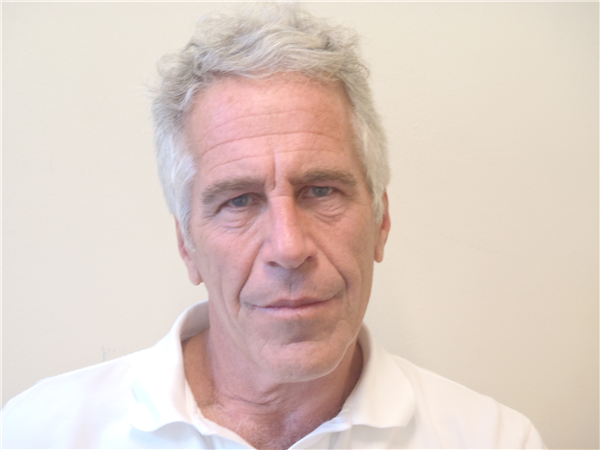
Who Released the Epstein Files?

At first glance, this question looks redundant. The FBI has the files. So, it's the FBI that released them. But the FBI has had possession of the files for a long time without releasing them. So, the question remains. Who exactly is behind the release?

Trump's promise

Trump promised to release the files during his election campaign. But once he was in office, he soon shifted his rhetoric, and by now he's straight up resisting their release.

However, he's no longer in control of the process. Because it's Congress that demands the release, and there's nothing Trump can do about that.

The will of the people

It appears then that the files are release because of popular demand. But does it ever happen that popular demand controls the narrative? I'd say no. Things only happen because people in power want it to happen. A narrative is then created to make it look like popular demand.

We need look no further than the Covid scare to have this suspicion confirmed.

Winners and losers

So, the way we have to go about this question is to look at who benefits and who loses.

The ones pushing for the release are either not in the files, or only tangentially implicated.

On the other hand, those deeply implicated are definitely not pushing for this. But they have to be secretive about this. They cannot be too outspoken, or it will direct suspicions towards themselves.

Asymmetric leverage

The fact that the ones in the files must be careful about what they say or do gives those pushing for the release of the files leverage. Statements can be formed around which everybody must agree, even if implicated in the files.

No-one can openly be against investigations related to child abuse without coming across as morally suspicious. So, a narrative can be created that no-one dares to resist, and that is what seems to have happened.

The anti-Trump trap

The ones pushing for the release of the files have used to their advantage the fact that the press is vehemently anti-Trump.

Instead of using Trump as a pro-release ally, they have given him the role as an opponent, knowing full well that the press will call for whatever Trump is against.

When Trump announces that he's against the release of the files, the press assumes that he must be hiding something. So, they demand for the release of the files.

This is in many cases the opposite of what the owners of the press want the press to do. But how can they communicate this to their journalists without drawing attention to themselves? The answer is that they can't. The owners are trapped.

Congress votes for release of the files

A popular call for the release of the files has thus been created.

The Democrats in congress all agree with this, of course. After all, most of them are not in the files, and those who are cannot very well express their opposition.

In parallel to this, the ones pushing for the release engage morally passionate Republicans to call for a release as well.

The same mechanism kicks in. No-one is opposed to the release, neither Democrat nor Republican.

When the vote is counted, there's hardly a single congressman against the release of the files.

The Senate ratifies it, and Trump sees himself forced to sign the bill.

No-one to blame

The people in the files are extremely powerful and dangerous. So, if it was possible to point to a single perpetrator, that person would be dead today. However, the perpetrators acting from behind the scenes are nowhere to be found.

But there are clues.

The one man who has been passionate about the files, and who was an early whistle blower, is no other than Trump himself.

My guess is therefore that it is Trump who devised the trap.

Once he realized that he'd get a bullet in his head if he were to go through with the promised release, he changed his tone. Then he used the predictable anti-Trump rhetoric of the press to get the files released anyway.

Jeffrey Epstein
Jeffrey Epstein

By U.S. Virgin Islands, Department of Justice - Found on U.S. Virgin Islands, Department of Justice, Sexual Offender Registry for Epstein , Jeffrey Edward (Incarcerated) (Image source), Public Domain, Link

Monday, February 2, 2026

The Gap in the Daily Chart has now been Filled

Gold has made some crazy moves lately. Especially after a gap appeared in the daily chart some nine trading days ago.

We went from about $4,650 to $5,600 in a matter of five days, only to be hit by a three day sell off down to a low of $4,400.

This can all be explained, technically, in terms of the above mentioned gap.

The rule is that when a gap appears, it indicates speculative fever. What follows is unsustainable, and will always collapse down to below the gap. The gap will in other words be filled.

Once the gap is filled, we have support, and the rally can continue.

My prediction for the gold price is therefore that it will start producing a bullish base for a break out above $5,600.

There will be support at $4,650, and this support is likely to trend upwards.

This will take several months to form, so this is a good time to start accumulating gold. Buying gold at below $5,000 is likely to prove itself profitable by the end of this year.

Daily chart for gold up until 2/2 2026


Wednesday, January 21, 2026

Raw Garlic and Ginger

Growing old means that good health is no longer a given. Little ailments, pains and aches don't go away on their own as they used to. At least not as readily as it used to.

Sore thumb

For example, I managed to hurt my thumb while working in my mother's garden back in October. My thumb became painful and weak. I could grab, but not push with my thumb. It was the sort of little thing that should have passed on its own over a few days. But my thumb stayed sore and numb for weeks without any sign of improving.

I was starting to think that it was permanent, possibly rheumatism of a sort. So, I started looking for ways to simply live with it.

Other things have improved

However, other ailments have shown signs of improving lately. I have not had any back pain in a long time. Not even now, in the middle of winter.

A patch of dry and sensitive skin has also disappeared. But two toes on my right foot are still infected with fungus, despite initial improvements. My daily routine of washing, massaging and applying oil on them is merely keeping them from getting any worse.

Experimenting with garlic and ginger

So, I had the idea that my toes might benefit from some additional help. Since I'm massaging them in order to help blood flow, I figured I should look for foods that do the same.

Looking this up on the web, I found raw garlic and ginger mentioned among a list of other things.

We have both of this in house, so I figured I try it. A bit of both, like a supplement of sorts.

Unexpected improvement

The effect was pretty much immediate. But not for my foot, which remained unaffected.

It was my sore thumb that improved. So much so that it has just about completely healed by now, exactly one week after I started the experiment.

Effects come and go

I've been experimenting with different remedies for well over two years now, and I've noticed that some remedies lose their effectiveness over time. I was enthusiastic about cumin seeds for a while. But I no longer take them. Now, it's garlic and ginger.

It's as if my body gets accustomed to remedies, forcing me to change every now and again. There's no permanent fix. Just a set of things that work. So, there's a constant need for change.

But there's so many things that work, at least for a while, that the need for change can be met with a great cycle of change. Things that stop working will eventually start working again. Cumin seeds may be just the thing for me in the future. But for the moment, I'm sticking with the perfect breakfast.

Conclusion

There are three types of ailments, and three types of remedies. The ailments are:

  • skin problems
  • digestion problems
  • muscle and joint problems
and the remedies are:
  • oils, and cremes applied to the skin
  • herbs, seeds and spices taken as dietary supplements
  • healthy diet and exercise

For every ailment, there's a set of remedies, some of which are only effective for a while.

The trick is to experiment and cycle through the options available to us. Try things, pay attention to effects, and keep up anything that has a positive effect.

If there's no noticeable improvement after a few days, the remedy isn't working. If there's a noticeable decline, some important remedy has been terminated, or some bad habit/food has started.

Wellbeing is the measure of success. Awareness of its presence or absence is therefore key to success.

Ginger cross section.jpg
Ginger cross section

By Sanjay ach at the English-language Wikipedia, CC BY-SA 3.0, Link